What is a business website, and who needs one?
A business website is a company’s official home on the internet. It presents your identity, services and references in an organized way. When a prospect, partner, dealer or job candidate looks you up, this is the first place they check. A social media account or a directory listing cannot do the job alone, because you do not control the content or the presentation.
A business website is especially valuable for:
- Service companies: moving, courier, cleaning, consulting and technical service.
- Manufacturers and suppliers: those who need to show catalogs and references clearly.
- Wholesale and B2B firms: companies speaking to corporate buyers who look for reliability.
- New brands: businesses without name recognition that need to earn trust quickly.
For a general framework, read our business website guide. If you want the wider picture of how we build sites, see website development.
What kind of business site do we build?
A good business site must look good, but it must also be fast, clear and manageable. We follow a few core principles.
A clear page structure
In a few seconds a visitor should understand: what does this company do, is it right for me and how do I reach them? So we keep the menu simple and present services and references on separate, scannable pages. The goal is a multi-page structure that is still easy to move through.
Speed and mobile fit
We prepare the site as static pages, optimize images and remove unnecessary code, so pages open quickly. We start the design from the small screen, because even corporate buyers often call you from a phone. Our post on mobile-friendly websites covers the details.
A search-ready structure
Each page gets its own title, description and a proper heading hierarchy. A sitemap and structured data are added from the start. This is not a ranking promise. It is the groundwork that lets search engines read your site correctly.
Legal pages and trust signals
On a business site, privacy notices, data protection statements and cookie banners need planned space from the beginning. You will need legal support for the wording; we set up the layout and technical groundwork. We discuss this further in our article on a privacy-compliant website.
Why it matters for results
A business site builds trust before a sales conversation even begins. A company asking for a proposal is looking at your competitors the same day. Clearly described services, visible references and easy ways to reach you help you stand out in that comparison.
When contact paths are short, enquiries grow. Phone, WhatsApp and the form should be one click away from every page. How a site turns visits into enquiries is a topic of its own; our post on website conversion explores it.
Which pages should a business site have?
Every company is different, but most business sites get a strong start from these core pages:
- Home: Explains what the company does on the first screen and sends visitors to the right page.
- About: Presents who you are, how you work and what you value in a human voice.
- Services or products: Each one gets its own clear, searchable page.
- References: Your real work is the most concrete proof of trust, so it should be verifiable, never invented.
- Contact: Phone, WhatsApp, email and map details are visible at a glance.
- Blog or news: Optional, but regular content contributes to search visibility over time.
This structure grows without breaking when you later add a service or a branch. Giving each service its own page also makes it easier for someone searching for it to reach you directly.
Content: the most neglected part
Even when the technical build is finished, empty or vague copy weakens a site. That is why we spend time on the content plan at the very start. For each page we answer together:
- Who is this page for?
- What question is the visitor trying to answer here?
- What do we want the visitor to do at the end of the page?
For a practical roadmap on writing, preparing website content is a useful guide.
Local visibility and your Google Business profile
If your company has a physical address or a service area, the business site should be planned together with its Google Business profile. When the address, phone number and opening hours on the site match the profile, search engines receive a consistent signal. We cover this in our article on local SEO and Google Business.
After launch: maintenance and updates
A business site is not finished the day it goes live. Services, team members and contact details change. Keeping the site current matters for both trust and search visibility. For when maintenance becomes necessary, see website maintenance.
Experience from real projects
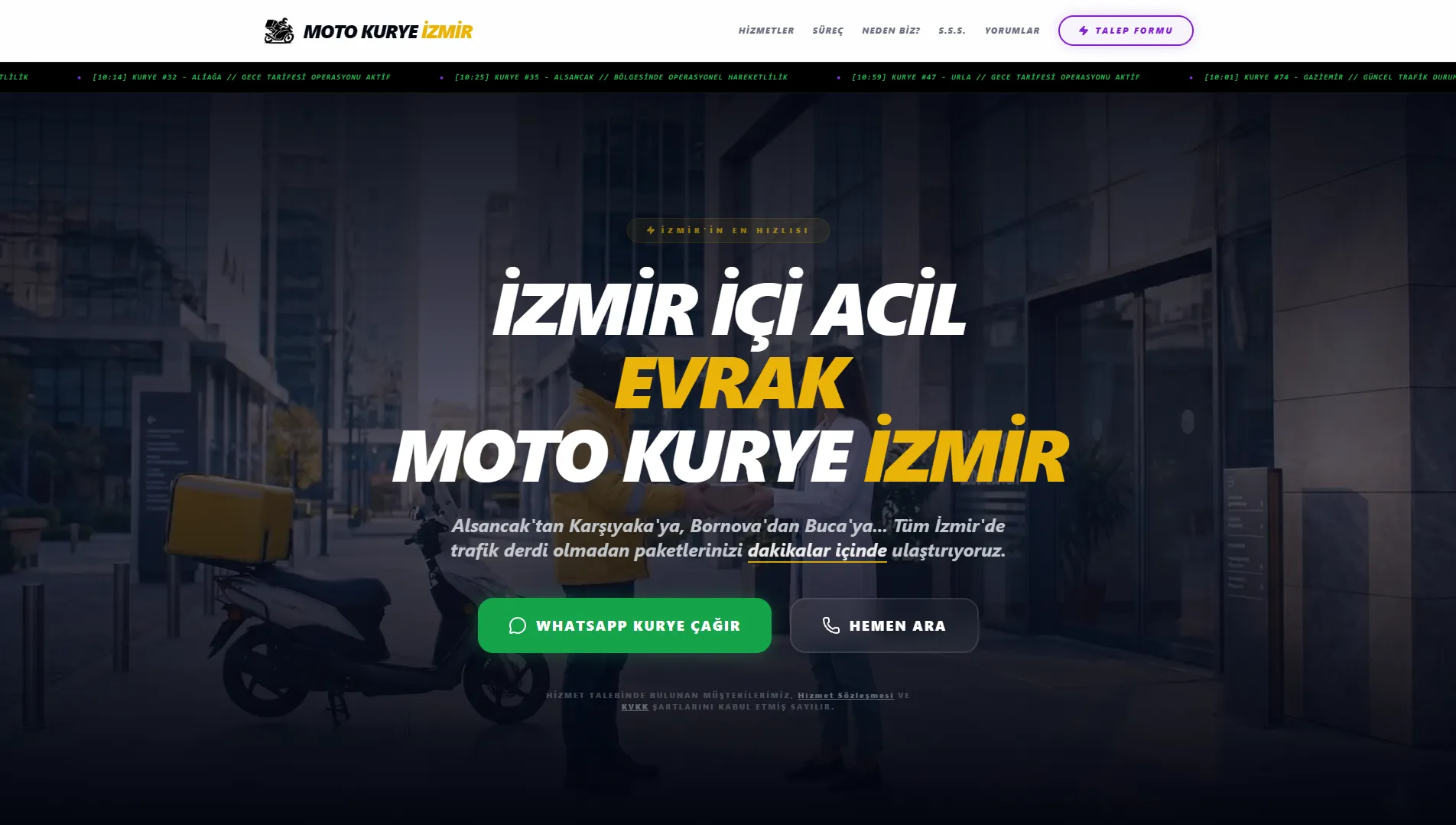
We apply six years of software experience to real work. For motokuryeizmir.com, an Izmir courier service, we developed a corporate site with WhatsApp integration and a focus on local search. It is a concrete example of how a service company gets a site that is quick to reach and builds confidence.
How we work together
You write to us on WhatsApp or by email, and we aim to reply the same day. Throughout the project we share what we are doing and what comes next. Working without extra layers and talking directly keeps decisions quick.
Get in touch and let us plan the structure that tells your company story best.